
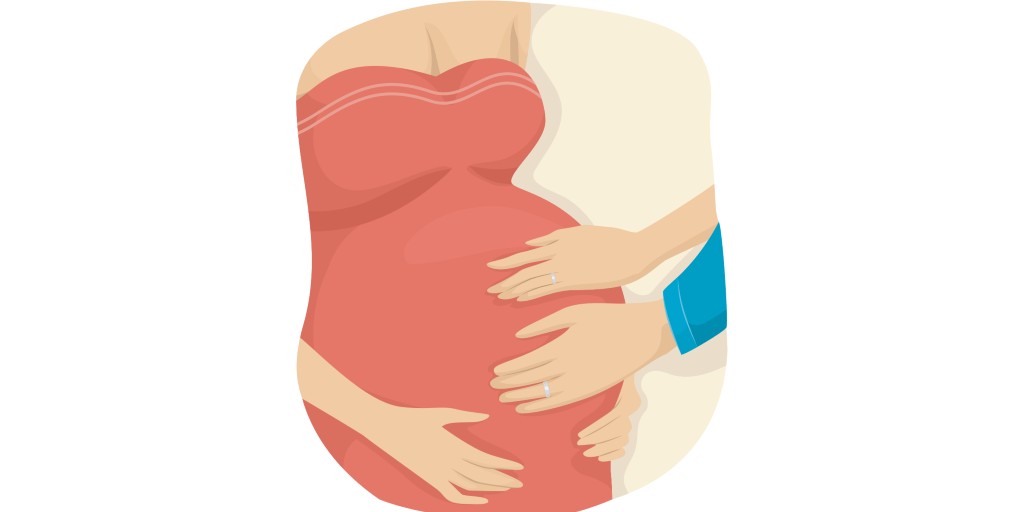
As the congress of the Left Radical Party approaches, Flavio Dalmau, president of the Young Left Radicals of Haute-Garonne, invites his party to adopt a clear stance on ethical surrogacy (GPA).
On June 6, just months before the presidential election, the Radical Party of the Left will hold its congress. While the far right seeks to position itself as the defender of a “societal ideal,” the progressive left will bear the responsibility of reclaiming its quest for human emancipation. Therefore, within this congress, we will present a contribution aiming to integrate the establishment of an ethical surrogacy policy into our program, so that the PRG becomes the first national party to defend a French model that is respectful and deeply republican.
Since the legal ban on surrogacy in 1994, French society has evolved deeply. European and French jurisprudence has progressively led to the recognition of children born through surrogacy carried out abroad, in the name of the best interests of the child. This evolution highlights a reality: parenting journeys already exist and involve a wide variety of human situations. Contrary to caricatures often advanced in public debate, surrogacy cannot be reduced to a single claim; in a note in 2023, the Senate recalls that, in countries where surrogacy is authorized, “the majority of surrogacies performed in clinical settings involve heterosexual couples facing irreversible infertility or women for whom a traditional pregnancy would expose them to severe health risks”.
To those who, comfortable in their own situation, think that the current system bans surrogacy and that such a ban would be just, it is worth reminding them that it does not eliminate the recourse to surrogacy; it simply refuses to acknowledge its reality.
It is because our country lags behind on societal debates that we have the necessary distance to recognize the abuses that have appeared in certain foreign systems—whether private agencies or commercial intermediaries, at times establishing an opaque and lucrative market. Several countries demonstrate that it is possible to develop another model of surrogacy, such as Canada, the United Kingdom, or the Netherlands. Because of this delay, and because we have learned from what is done elsewhere in the world, we can now construct a surrogacy model among the most protective and ethical.
Left-wing radicalism has historically been built around human emancipation through individual freedoms and social progress. We have been pioneers of secularism with the 1905 law, divorce reinstated in 1884, contraception, the PACS, PMA and the right to die with dignity. The question of surrogacy must be addressed in this spirit, without any moral conservatism, without any commodification of the human body, because a child cannot be considered a consumer good, nor be the subject of a commercial contract, and because a woman’s body cannot be regarded as a market object. That is why the public power must assume its role.
We must defend an ethical surrogacy model, ensured by its altruistic, exceptional and medically justified nature. Guarantee that this process takes place without any commercial remuneration, without lucrative private agencies and without any possibility of economic profit. To do this, it must rest solely on free and informed consent, on a process possessing strong social guarantees, on an assumed judicial control and on permanent psychological support. Surrogacy must remain the ultimate medical and human recourse in the process of procreation. The role of the politician is not to deny human realities. It is to propose a demanding framework guaranteeing the humanism indispensable to our society.
The entire left has a renewed rendezvous with its history. To it, to us, to continue being precursors of societal progress and emancipation.
