
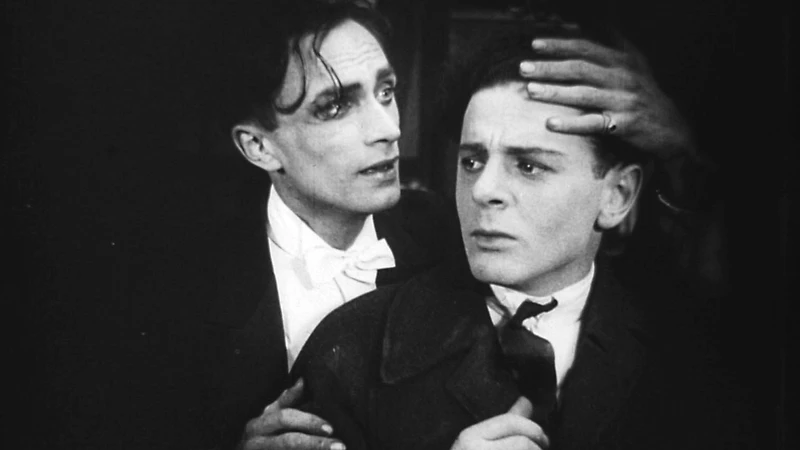
In 1919, the German film Anders als die Andern, Différent des autres—in French, Différent des autres—was released in cinemas. It is recognized as the first film to feature openly gay characters. While this was already very courageous for the era, it was only the beginning of the scandal, because the film goes beyond mere representation: it is openly committed to LGBTQIA+ rights. Différent des autres criticizes homophobia and is firmly opposed to Paragraph 175 of the German Penal Code.
This paragraph criminalized sexual relations between men. It was established in 1871, and men found guilty could face prison. In 1935, the Nazi regime greatly tightened Paragraph 175, enabling mass arrests of homosexual men. Some were subsequently deported to concentration camps, where many wore the pink triangle. It was not fully repealed until 1994.
The Genesis and Reception of Différent des autres, the First Gay Film in History
The film belongs to a genre that emerged just after the war, the Aufklärungsfilme, educational and awareness-raising films about sexuality. These films were launched and popularized notably by Richard Oswald, and could address topics such as abortion, prostitution, or sexually transmitted diseases. Richard Oswald was also the director, producer, and co-screenwriter of Différent des autres. He co-wrote this film with the physician and sexologist Magnus Hirschfeld.

This feature-length film tells the story of a renowned violinist, Paul Koerner, played by Conrad Veidt, and his budding romantic relationship with his pupil, Kurt Sivers. The violinist visits the sexologist for advice. If the latter reassures him about his sexuality, an old acquaintance of Koerner recognizes him with Sivers and blackmails him: if he does not give him money, his homosexuality and his romantic relationship with his pupil will be revealed to the police.
Released in 1919, the film elicited a wide range of reactions, some positive, but others much more virulent. Many screenings were disrupted, with riots or jeers, or with the distribution of homophobic pamphlets. The film was censored the following year, on the pretext of endangering public safety and corrupting the youth.
Magnus Hirschfeld’s Involvement, a Historic Activist
Dr. Magnus Hirschfeld participated in writing Différent des autres, as well as in other educational films by Richard Oswald. In Différent des autres, he plays his own role as a sexologist.
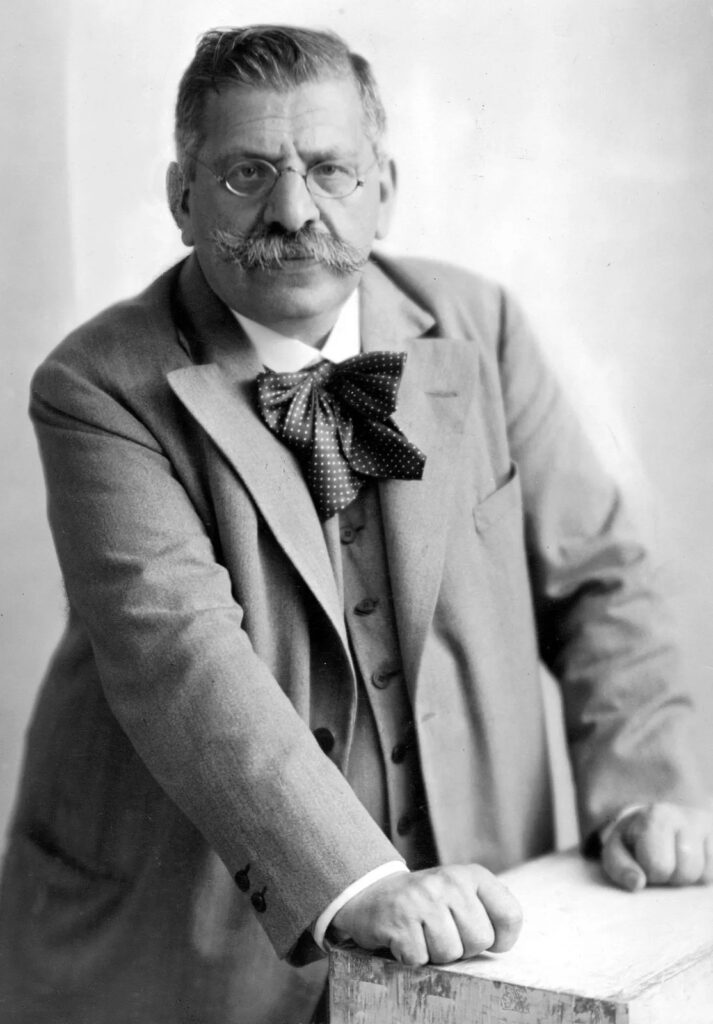
Magnus Hirschfeld was a sexologist and LGBTQIA+ rights activist; he argued that homosexuality is neither a crime nor a disease. He founded the Comité scientifique humanitaire (Wissenschaftlich-humanitäre Komitee, WhK) in 1897, the first organization dedicated to defending the rights of homosexuals and the decriminalization of homosexuality. One of the committee’s goals was the abolition of Paragraph 175 of the German Penal Code, notably arguing that it fosters blackmail.
In 1918 he also founded the Magnus Hirschfeld Foundation, with which he established the Institut für Sexualwissenschaft (Institute for Sexual Science) in 1919, the first institute in the world dedicated to the study of human sexuality. This institute performed the first known sex reassignment surgery. He was mockingly dubbed by the German press as the “Einstein of Sex,” and eventually fled Germany in 1930, feeling no longer safe.
Through his role as a sexologist in the film, he defends the hero with a deeply committed speech: “Love for a person of the same sex is not less pure or noble than that for a person of the opposite sex. This orientation is found at all levels of society and among respected people. Only ignorance or intolerance leads to condemning those who feel different from others.” His interventions in the film allow, before serving the plot, to convey his message.
The Rise of the Nazis to Power: The Gay Film Différent des autres a Victim of Book Burnings
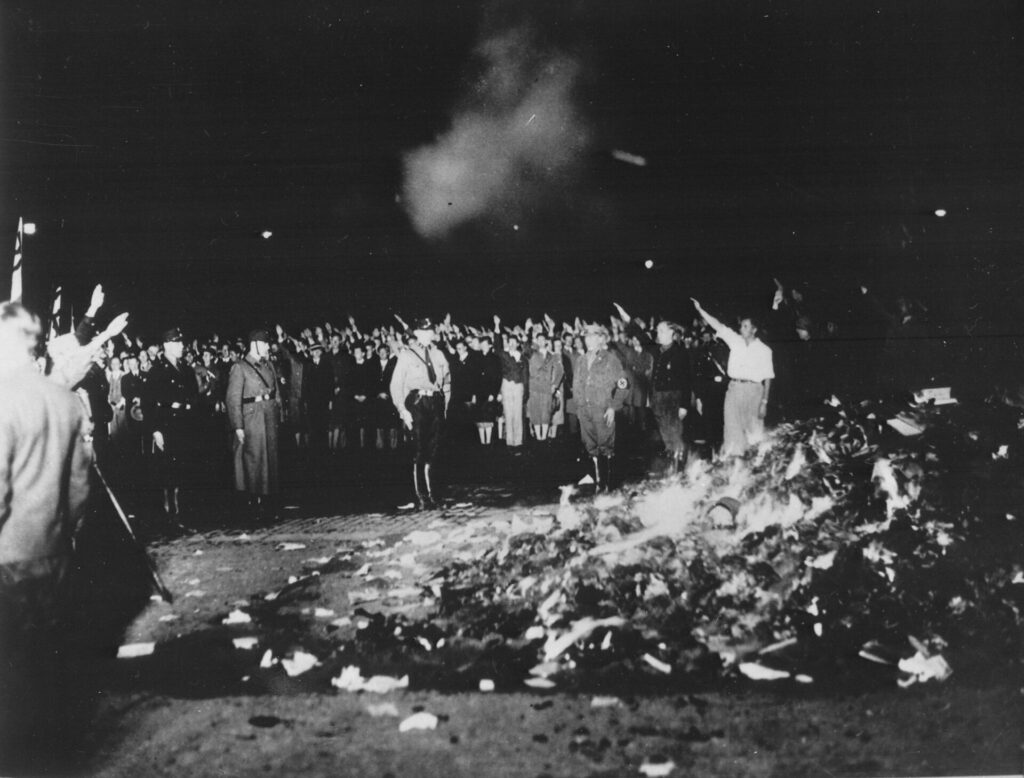
Complete copies of the film were destroyed when the Nazis came to power in 1933, notably through a book burning: the burning of Magnus Hirschfeld’s Institute of Sexual Science library. Today, the original full version is unavailable.
Fortunately, parts of the film had already been used in a Magnus Hirschfeld documentary in 1927. This documentary, The Laws of Love (Gesetze der Liebe), contained between 40 and 50 minutes of Différent des autres. The documentary was also banned and destroyed, but copies exported to the Soviet Union survived.
The Rediscovery of Différent des autres, 38 Years Later
38 years after the destruction of the Institute of Sexual Science, it was re-screened again in 1971, in Vienna, during a Richard Oswald retrospective. Austria, being neutral during the Cold War, was able to access the archives of Soviet films (Gosfilmofond). However, the version obtained was a segment of the documentary The Laws of Love, which had not been re-edited and thus bore little resemblance to the 1919 film.
Subsequently, in the 1970s and 1980s, footage from the film appeared in various festivals or exhibitions. In 1999, at the request of the Franco-German channel ARTE, the Filmmuseum Munich undertook an initial reconstruction of the film, using all available archives and attempting to stay faithful to the film. A new version appeared in 2004 for a commercial release, and was finally restored in 2019. This restored version is available on the online library “Internet Archive.”
More than 100 Years of Queer Activism
More than a century after its release, the gay film Différent des autres reminds us that LGBTQIA+ struggles did not begin with Stonewall, as shown by our timeline of key dates in LGBT history. Before the major liberation movements of the 1960s, activists, scientists, and artists had already denounced discrimination and imagined a more egalitarian world. The miraculous survival of this film testifies to the persistence of queer voices that History had attempted to erase.
