
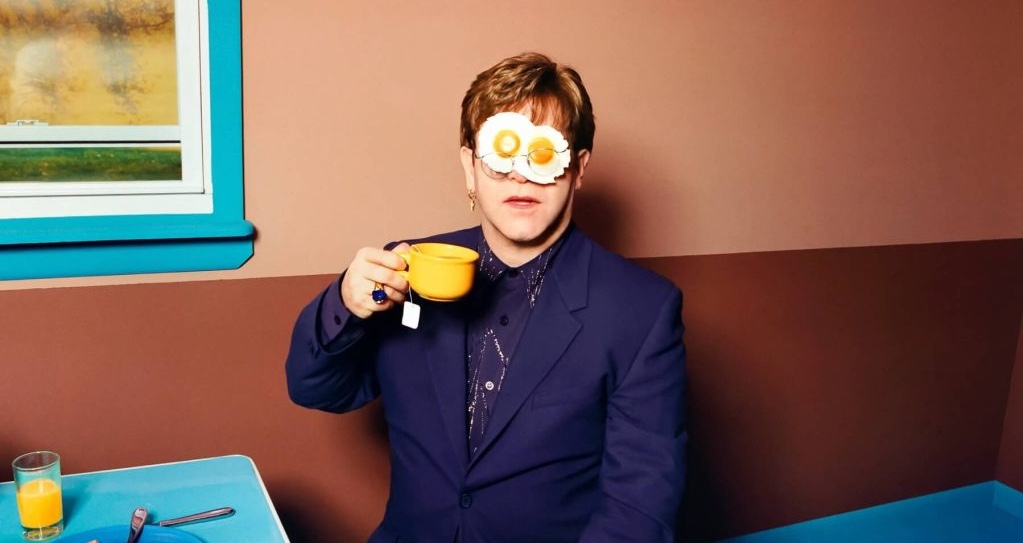
With Fragile Beauty, the Jeu de Paume Museum in Paris Unveils More Than 300 Photographs Collected Over More Than Thirty Years by Elton John and His Husband David Furnish. An Exhibition That Traverses the History of Contemporary Photography as Much as It Sketches an Intimate Portrait of the Singer.
What are the images that touch Elton John at the core? From June 12 to September 27, 2026, the Jeu de Paume, in Paris, hosts the exhibition Fragile Beauty, which gathers photographs acquired for more than thirty years by the British singer and his husband, the filmmaker David Furnish. Here you will discover more than 300 works, dating from 1950 to the present, signed by more than 90 renowned photographers and organized into four major themes: fashion, celebrity, desire, and photojournalism.
The story begins in 1991. Fresh out of rehab, Elton John discovers photography almost by chance, when a gallery owner shows him black-and-white fashion prints. The infatuation is immediate. He, who has spent his life in front of the camera, suddenly becomes passionate about the artists behind the lens. The first photographs he collects occupy an important place in the exhibition: the elegant compositions of Irving Penn, the sculpted bodies of Herb Ritts, or the famous photographs of Melvin Sokolsky, which stage models floating in a bubble above Paris or New York.
Elton John Through His Photographs
Fragile Beauty is not merely a simple tale of photography. The works chosen tell Elton John’s obsessions, his struggles, and sometimes certain episodes of his life. The section devoted to celebrity is a good example. Far from glamorous images, it shows artists at work, tired or vulnerable. The portraits of Marilyn Monroe without makeup or absorbed in her rehearsals testify to an interest in what lies behind the legend. An approach that echoes the journey of a star who understands the weight of celebrity.
The section devoted to desire is nourished by the collector’s gay identity. A wide emphasis is thus given to queer photography, from the idealized bodies of Herb Ritts to the stagings of Pierre et Gilles, through the images of Tom Bianchi at Fire Island. A particularly special place is reserved for the singer’s favorite artists: Robert Mapplethorpe, but also Nan Goldin, whose set of 149 photographs, entitled Thanksgiving, is presented for the first time in France. One understands why Elton John has said he recognized in it “a large part of [his] past”. Long parties, bruised loves, addiction, intimate, enduring friendships, the departed: it is all a world of the intimate community that survives in these images.
Finally, Elton John’s activist commitment is felt in the final section of the exhibition, dedicated to photojournalism. There mingle the fight for civil rights, Act Up archives, and photographs of territories ravaged by war. As the journey closes, one clear fact stands out: this collection does not merely recount the history of contemporary photography. It also draws the portrait of a man fascinated by artists who lived on the margins, challenged norms, or survived their times.
