
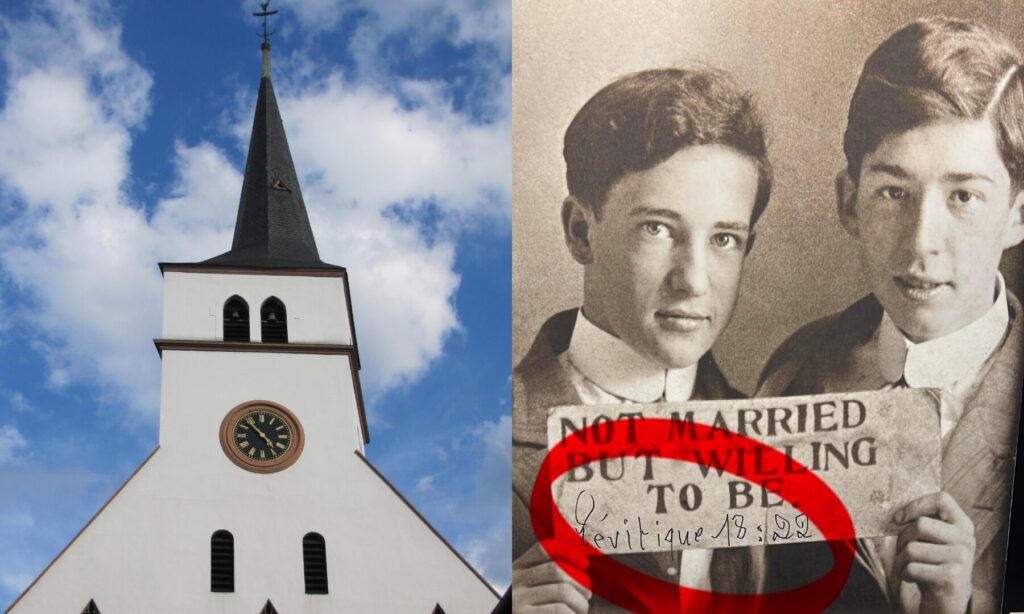
A new act of homophobia has struck Strasbourg. The exhibition “Ils s’aiment,” presented in the inclusive Saint-Guillaume church, was vandalized by a hateful biblical inscription. Another attack on the LGBTQIA+ community. A complaint has been filed.
An image of love attacked by obscurantism
This Tuesday evening, at Saint-Guillaume Church in Strasbourg, a photograph from the exhibition “Ils s’aiment” was deliberately degraded. The photograph, depicting two young men holding a sign “not married but willing to be”, was defaced with a black marker bearing the inscription “Leviticus 18:22”.

A gesture of evident symbolic violence. This image, taken at a time when homosexuality was still a crime, tells of love, hope, and the resistance of couples forced to hide in order to exist. It also evokes, almost presciently, the struggle for marriage equality. Defacing it in the name of a biblical verse is a frontal attack on the history and the dignity of LGBTQIA+ people.
“Once again, we are attacking the LGBT community”
The vandalism was discovered around 6 p.m. by Cyril Pallaud, president of the Passions Croisées association, at the closing of the church.
“I didn’t want to believe it. It is dirty and repugnant. Once again, we are attacking the LGBT community. This photo is extremely symbolically powerful. It shows the beauty and sincerity of love. To attack it is cowardly and very grave.”
Immediately alerted, Pastor Daniel Boessenbacher decided to file a complaint.
“Having an opinion does not give you the right to vandalize or spread hatred. Hiding behind a biblical verse to justify homophobia is unacceptable and punishable by law.”
Unfortunately, this is not an isolated case. In 2023, already, during the first show of Passions Croisées, the Saint-Guillaume parish had been the target of death threats. A chilling reality that reminds us that in 2026, homophobia is not in the past but remains a very present violence.
An attack on an inclusive church and LGBTQIA+ memory
Saint-Guillaume Church is a unique place in France, at once an inclusive parish and a national cultural stage, visited by nearly 100,000 people this year. It is precisely this open and welcoming character that seems to bother.
Presented as part of the programming “Strasbourg, my Love”, the exhibition “Ils s’aiment” gathers around thirty photographs of loving men taken between 1850 and 1950, at a time when their love was criminalized. The photographs come from the Hugh Nini and Neal Treadwell collection and accompany the books “Ils s’aiment” and “Des hommes amoureux”.
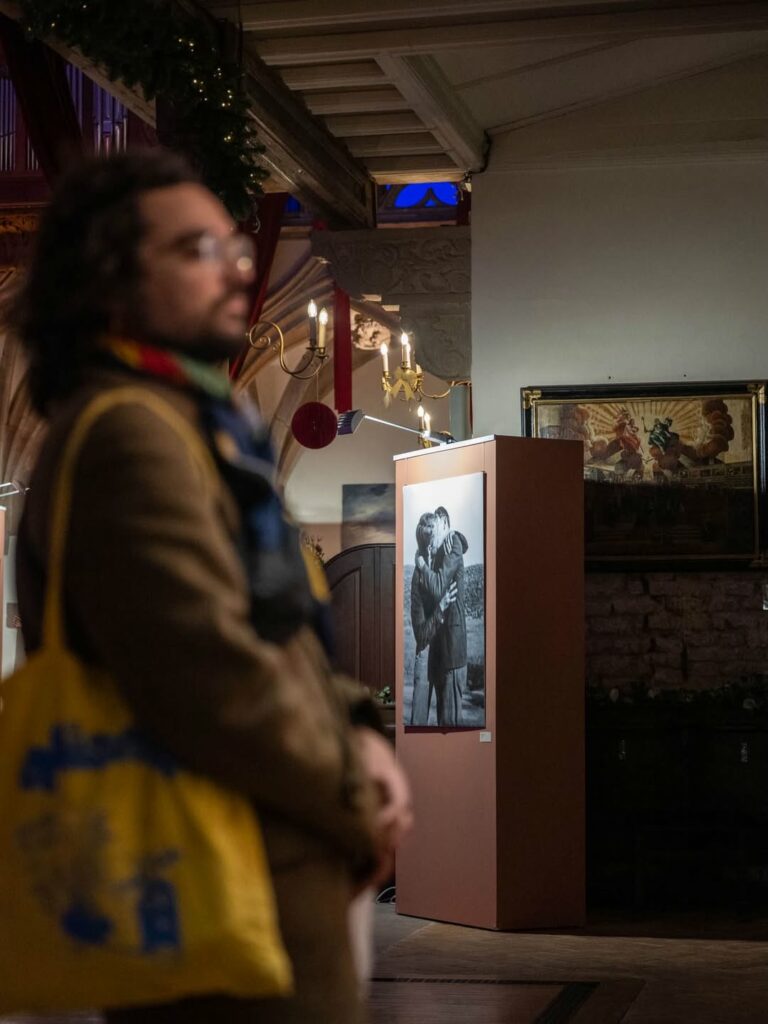
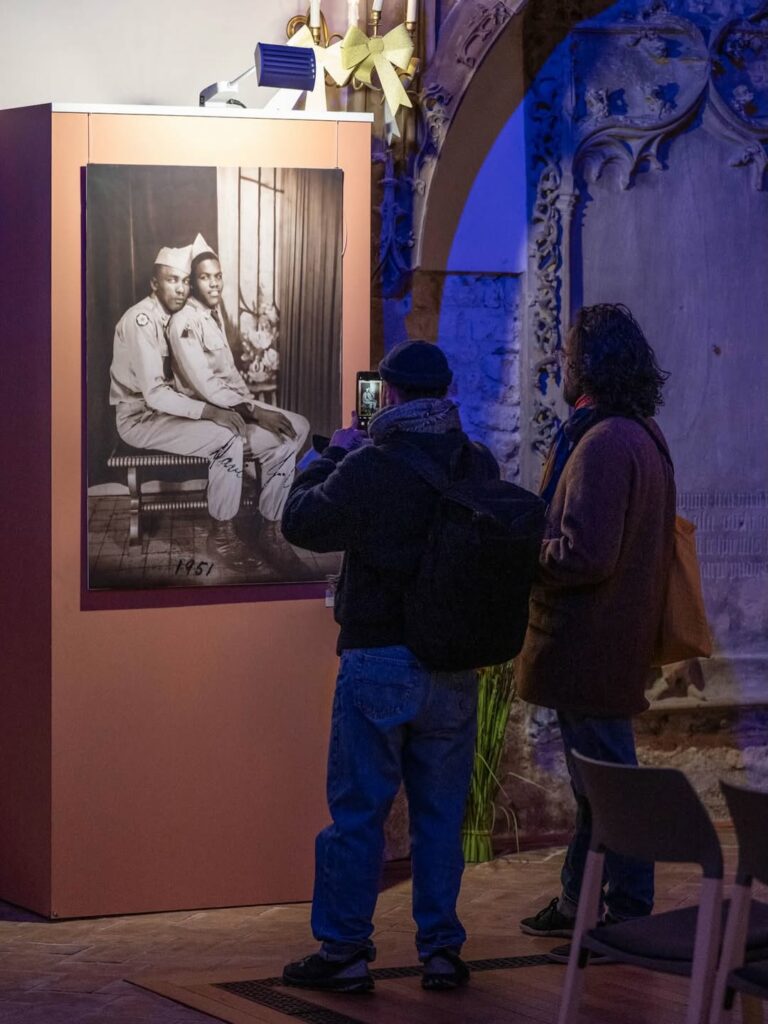
For Guillem Aubry, artistic director of Passions Croisées, the choice to exhibit these works in a church is deeply political:
“For centuries, religious institutions have condemned homosexuality. Showing today that a church can be open, inclusive, and an ally is essential. This act of vandalism will not make us back down; it strengthens our determination.”
The Leviticus verse used to justify this degradation has long served to legitimate exclusion, persecution, and violence against LGBTQIA+ people. Remembering it is essential: this text is part of a set of biblical prohibitions, too often instrumentalized to feed homophobic hatred… while, as if by magic, the rest of the biblical prohibitions never seem to bother these same believers!
Attacking this exhibition is not merely vandalizing a work. It is an attempt to silence a memory, a visibility, and a struggle that, evidently, still disturbs.
