
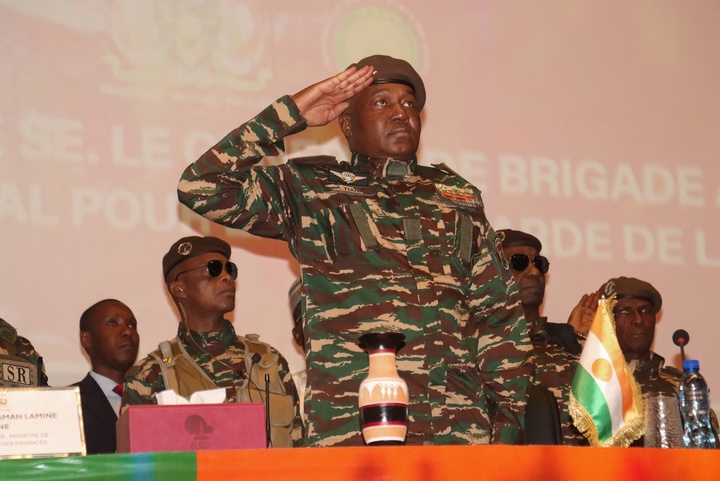
In Niger, homosexuality is now explicitly condemned by law as an act “against nature”. Led by a military junta since 2023, this Francophone West African country joins in turn the pan-African anti-LGBT crusade that is gaining ground on the continent.
Sixty-six years after its independence, Niger criminalizes homosexuality for the first time. In this West African country led by General Abdourahamane Tiani since the coup in July 2023, the ruling military junta has established a new Penal Code that provides 5 to 10 years in prison for “any person who commits or tries to commit an indecent or unnatural act or practices Lesbians, Gays, Bisexuals, Transgenders, Queers, Intersexes, Asexuals” (sic… after every comma).
The new Nigerien law does not stop there. In Section IV of the new Penal Code, entitled “On homosexuality or indecent acts on people of the same sex”, four articles lay out a whole new repressive arsenal targeting LGBTQIA+ individuals. Besides the prison terms mentioned above, Article 390 provides a fine of up to one hundred million CFA francs, or no less than 150,000 euros, the equivalent of two centuries of the country’s average salary. The same penalties apply to “any person who publicly displays their romantic relationship with a person of the same sex or who changes or tries to change their birth sex”.
In other words, the text does not target only homosexual relationships: it also criminalizes their public visibility as well as gender-transition journeys.
Should there be any doubt, the following article promises another 10 to 20 years of imprisonment to “anyone who contracts a marriage with a person of the same sex”, as well as to “persons who officiated the marriage, to the witnesses of the supposed spouses, and to those who gave their consent for the celebration of the marriage and to the organizers”. The next two articles criminalize moreover the management, funding, or even participation in clubs, events, or associations “for homosexuals or LGBTQIA+”. It has become clear: in Niger as in neighboring Burkina Faso, in Senegal, Ghana, and Uganda, those in power are cracking down on LGBT people.
Homosexuality in Niger
Even before the adoption of the new homophobic legislation, homosexuality was far from welcome in Niger. The predominantly Muslim population displays one of the continent’s highest rejection rates, according to Afrobarometer, a pan-African network of opinion surveys, which reports that “intolerance toward sexual preferences reaches 94% in Uganda, Sierra Leone, and Niger”.
Before the promulgation of the new Penal Code, LGBT people could already be targeted by prosecutions for “indecency.” In 2022, two young women accused of maintaining a lesbian relationship were brought to justice. They were sentenced to two years in prison for having posted intimate videos on social media in which they appeared together.
During the trial, the court noted the absence of a provision explicitly criminalizing same-sex relations, and acquitted on that point. The case revived calls for an explicit criminalization of homosexuality. In December 2022, a group of lawmakers submitted a bill in this direction, led by Nana Djibou Harouna, who presented homosexuality as an “external problem”.
“Refounding” of State Homophobia
The summer 2023 coup occurred in a context marked by rising challenges to Western presence in the Sahel and the ascent of sovereigntist discourses. As in other countries on the continent, the LGBT question crystallizes these topics. As early as autumn 2023, in a council of ministers, the Minister of National Education explained that “the government has been informed of subversive attempts by certain satanic circles, in collaboration with a foreign power and a greedy group of Nigeriens, to introduce LGBT practices and debate into our society, particularly in the school environment.” The ruling junta pledged to “identify and bring before justice the leaders and their accomplices in this move contrary to our laws and mores”.
In 2025, the regime introduced a “Charter of Refounding,” comprising 78 articles that function as a new Constitution. Recognizing Islam as the majority religion, it promotes inclusion and tolerance before enacting, in Article 25, that “LGBTQIA+ practices or any other behavior against nature will be proscribed by law”. This is accomplished with the new Penal Code. Promulgated in the Official Journal on March 27, 2026, it passed largely unnoticed in the press until June 6, following the arrest in Niamey of an influencer. “During a body search, reports the Miroir de l’Ader, an online religious media outlet, the agents discover, astonished, that he wore beads on his hip, a symbol of femininity. This indicates his sexual orientation.”
Two days later, the newspaper L’Enquêteur announces a “sting operation targeting alleged pedophiles and homosexuals”. It is then that the paper informs its readers of the new “exceptional penal arsenal designed to eradicate these practices from Nigerien society”, predicting “a judicial earthquake in the making” against LGBT. “General Abdourahamane Tiani is preparing a painful lash against homosexuals and satanic sponsors”, applauds Miroir de l’Ader, which urges the authorities to open “a green line to denounce these cases of homosexuality and depravity of morals”. And the editors warn homosexuals, these “people who defy nature and engage in Western copy-pasting”, that they must beware under penalty of “dying in prison with your beads and your lipsticks”. Niger now fully aligns with this pan-Africanist anti-LGBT crusade conducted in the name of defending African values.
