
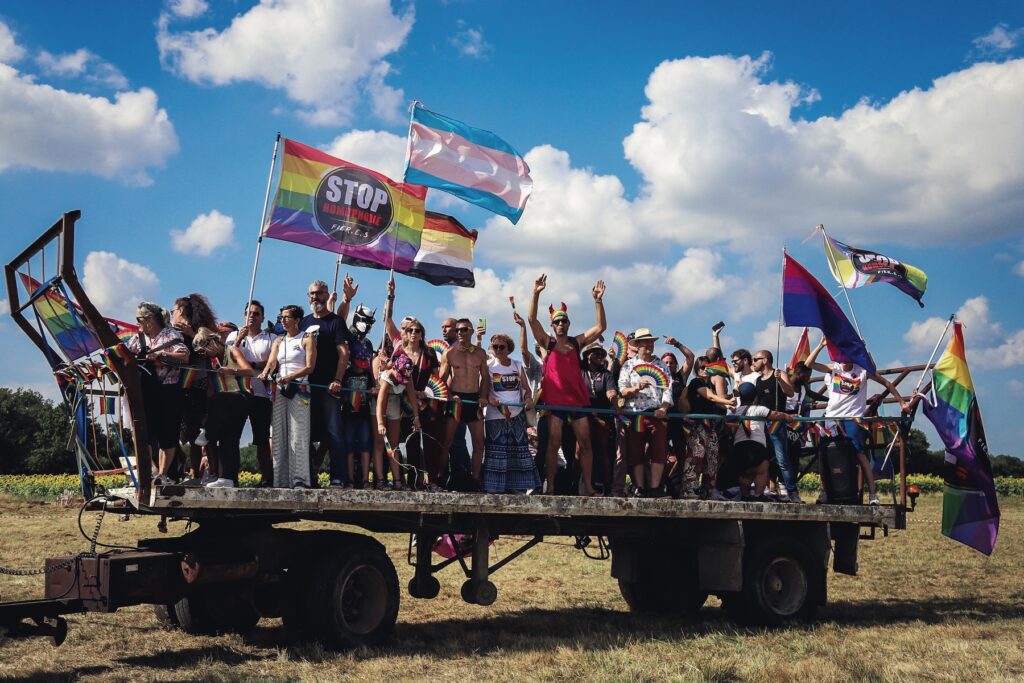
[Article to be found in the summer magazine, at your newsstand or by subscription.] This Saturday, July 25, as every summer since 2021, the village of Chenevelles, in the Vienne, sees its population multiply tenfold for a Pride that has become the major gathering of LGBT+ rural Pride. A look at the birth and rise of an event that aims to debunk stereotypes about life in the countryside.
Chenevelles, 482 inhabitants. Ten times more on the last Saturday of July. This village in the Vienne region then hosts the countryside Pride. With the objective of “making the countryside attractive for LGBT+ people, by offering them a political moment, a moment of visibility and a festive moment”, the event has, in five years, carved out a national reputation.
“We wanted to overturn the prejudice that LGBT people would not find their place in the countryside because they would be poorly received, which is false“, explains Cyril Cibert, the mayor of the commune in Nouvelle-Aquitaine. “Not only are we accepted, but we are expected in villages that seek to dynamize themselves”, adds Grégory Singer, president of Rural Pride, the association organizing the Pride, who notes that “many LGBT+ people move to the countryside later in life”. A banker by trade, this farmer’s grandson has lived in Lyon and Paris before returning to his home region.
After the harvest, the Pride
The idea was born by chance in a conversation, at the end of the Covid period, around an aperitif with Étienne Deshoulières, a Paris-based lawyer who regularly returns to this village where he grew up. Each year, he has taken to inviting a few dozen Parisian friends to Chenevelles for a weekend at his father’s manor, a retired architect. “And what if, this year, we organized a Pride outright?” he says, in a joking tone, to the mayor, who takes him at his word. Returning to Paris, Étienne Deshoulières submits the idea to the general assembly of Stop homophobie, the association with which he works: “Everyone was on board! It’s an association that loves original ideas.”
The locals eagerly get involved in organizing this Pride march, which ends with a festival where about twenty artists perform. A week before the event, several dozen volunteers of all ages come to lend a hand to install the stage, set up a bar, decorate the field made available. To welcome the public, many of these volunteers come to camp on site the weekend of the event, scheduled for the end of July, after most of the harvest is finished. Each year, the Young Farmers union can thus join the ranks of the procession, which gathered around 400 people at its first edition, in 2021.
Drag queens and straw bales
Four years later, the Rural Pride has seen attendance multiply tenfold, claiming 4,000 participants last year. “People from across the department come, but 80% are heterosexuals from the region who come to enjoy this joyful day”, estimates the mayor. The event particularly delights families, pleasing children with its spectacular drag queens perched on tractors or mounted on straw bales. A photogenic mix that ensures the Pride receives strong media coverage, helped also by Étienne Deshoulières’ network. The lawyer indeed activates his Paris network so that the event brings “national visibility to the LGBT community in the countryside”. Former contestant on L’Amour est dans le pré, on M6, the Pride’s sponsor, Mathieu Ceschin, also lends his notoriety.
View this post on Instagram
Sophie Brennan