
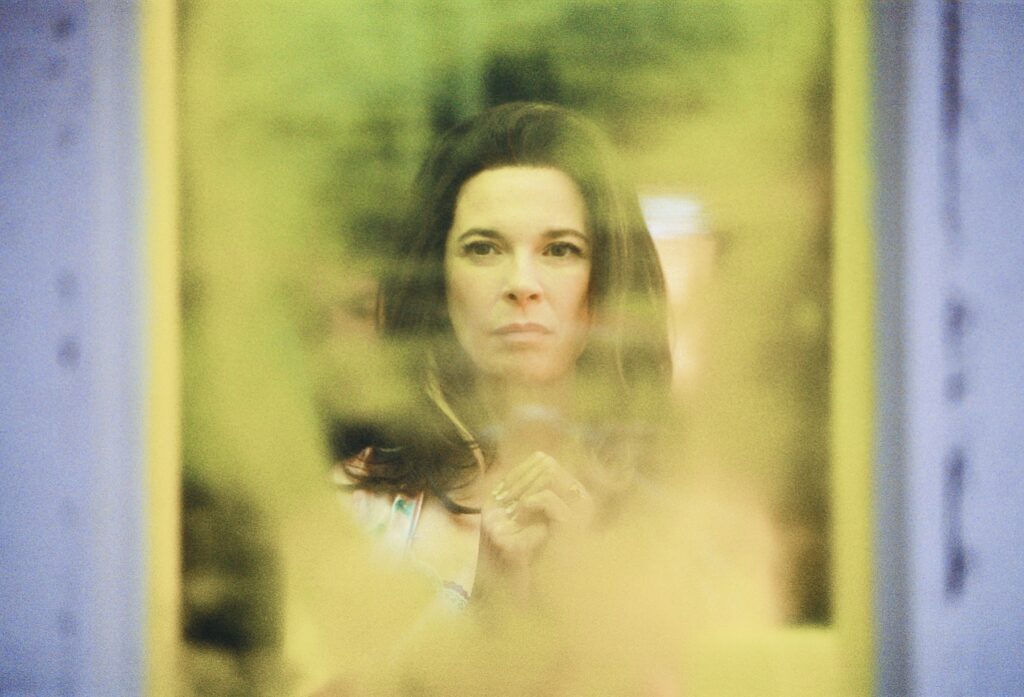
[Interview to be found in the autumn issue, at your newsstand or by subscription.] Revealed in France by The Heart Has Its Reasons, Anne Dorval has since become one of Xavier Dolan’s emblematic performers. The 65-year-old Quebec actress reflects on her career, her queer children, the AIDS years, and her commitment as an ally in the face of the rise of LGBTphobic discourses.
First things first, film buffs want to know: will you be in Xavier Dolan’s next film, who has announced his return to directing?
If that film happens, I would have to be part of it. We should actually shoot in Europe. But it all depends on the funding. Making cinema costs more and more; producers take more precautions and budgets become difficult to assemble.
How did your first meeting go?
We met in a dubbing studio. One day, when he was about 15, he came to me with a screenplay. He was already extremely determined and wanted me to star in the film he dreamed of making. We ultimately shot I Killed My Mother and it was during this shoot that we became friends. Today, not a week goes by without us seeing or speaking to one another.
What does Xavier Dolan bring you as an actress?
What I love above all are complex, deeply human characters and full of contradictions. Xavier has written female roles the way very few authors have, including among women. When I read the script of I Killed My Mother, what struck me was the accuracy with which he understood this mother. In Mommy, it’s the same. It’s fascinating to see a such a young man understand with such finesse the pain of mothers and women. With him, I feel an incredible freedom, something I have sometimes felt in theatre, but rarely in front of a camera.
Even before your work with Xavier Dolan, the French public associated you a lot with Criquette and Ashley Rockwell, in the series The Heart Has Its Reasons, which have become drag icons!
That’s extraordinary, because we had no idea the series would cross the Atlantic and meet such success in France. Even less that it would enjoy a second life thanks to social networks. An entire new generation is discovering these characters on Instagram and TikTok. And when I come to France, even twenty years later, I’m still talked about! That these characters have become drag icons touches me greatly. This art relies on exaggeration: too many feathers, too many colours, too much makeup, too many wigs… It is precisely what amused me about Criquette and Ashley, pushing the boundaries and the limits, and saying everything that is not said.
You describe yourself as an ally. Where does this commitment come from?
The LGBT community needs allies: the more there are, the better the world will be. For my part, I have always had gay or lesbian friends and I have seen their suffering, notably in the 1980s with the AIDS epidemic. I lost many friends when I was barely 20. I was just starting to do television, in a soap opera that was doing very well. My makeup artist was only 25 when he learned he was HIV-positive. A year later, he died. This was before the advent of triple therapy.
You are also the mother of a non-binary child, as you revealed last spring in the Quebec podcast Not Very Proud… The coming out must have gone well?
I never had any difficulty accepting who my children were. I have two children, Louis and Élie, who are both queer. At first, I had trouble with using the pronoun “iel” for Élie. Because of my age and that I always forget how to use it, so I can say: Iel is happy. But after their coming out, I witnessed a liberation, which even manifested physically, notably in their posture. It is something immense to finally be able to say who one is! But I questioned myself a lot and I often wonder: Why didn’t they tell me earlier? I realize that despite all I thought I had transmitted, they may still have been afraid of my reaction. This guilt is always within me, because all those years of silence were years of suffering for them.
Your exchange with Éric Zemmour in 2014, on the show We’re Not in Bed, marked the French public. Are there today discourses comparable to his in Quebec?
At the time, I was very affected by that exchange. I would have liked to be calmer and to have a real discussion with him. I do not think confrontation is a good way to do it. I do not seek to persuade people who already think like me, but to reach those who do not share my views. Canada has long had a lead on LGBT topics, notably on same-sex marriage. This openness remains but is weakened. We are also seeing a rise of the far right in Quebec and masculinists openly call for a rollback of rights for women and minorities. There is also a rise in homophobia among young people and in schools. As for transphobia, I won’t even mention it. This dynamic is dangerous for LGBT people, but also for women.
