
France Secured Support from 52 Other States for a Declaration Calling for Universal Decriminalization of Homosexuality, Presented to the UN Human Rights Council. A Diplomatic Victory Despite Opposition Encountered Even Within LGBT+ Rights Advocates.
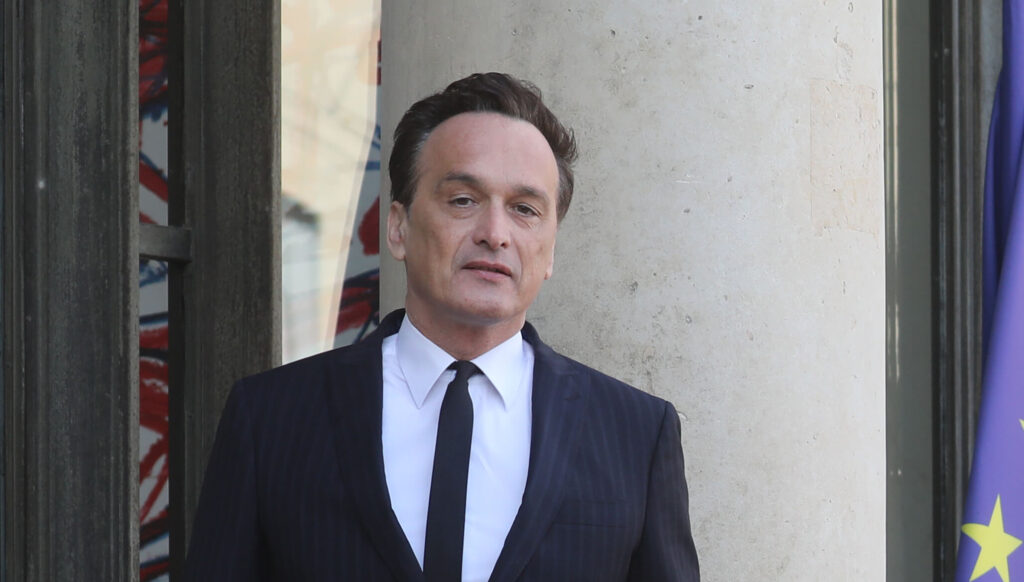
“It’s the demonstration that the world does not confine itself to conservatism.” Four years after being named France’s first ambassador for LGBT rights, Jean-Marc Berthon savoring his diplomatic success. Tasked notably with presenting, on behalf of France, the universal decriminalization of homosexuality, he secured the support, on October 7, of more than fifty states for a declaration to that effect presented to the United Nations Human Rights Council.
“Human rights belong to everyone. No one should be arrested, punished, or imprisoned for consensual relations between people of the same sex”, proclaims the French declaration, defended during the 63rd session of the Human Rights Council, in Geneva, before its 47 member states. “It is urgent to clearly recognize that the criminalization of consensual relations between people of the same sex is incompatible with the fundamental principles of international human rights law”, the text concludes, which calls “all states that still maintain laws criminalizing consensual relations between people of the same sex to reexamine them without delay with a view to their repeal”.
Against Winds and Tides
The declaration was “validated and endorsed” by a slim majority of the Council’s member states (24 out of 47), to which other UN member states added their support, bringing the number of states backing the initiative to 53. A diplomatic advance achieved at the cost of a compromise. Initially, France had wanted to have a resolution adopted by the Human Rights Council, before settling for a joint declaration by the states supporting it. A difference in political scope, even though neither instrument is legally binding. “It is a text on which civil society in countries that criminalize homosexuality can base their demands to show that their country is isolated in the world”, argues the French ambassador.
So why this change of course? Unsurprisingly, the French initiative initially encountered the hostility of reactionary states, led by the Organization of Islamic Cooperation (OIC), whose Pakistan led the opposition within the Council. But lobbying against the draft resolution also came from 140 human rights organizations, which on June 24 sent a letter to Emmanuel Macron urging him to “suspend all efforts to obtain a Council resolution on decriminalization”. With Têtu (see our autumn issue), the advocacy head at the LGBT+ federation ILGA World, Shakhawat Hossain, justifies this opposition: “When you take such an initiative, you must be aware of the risk of backlash for local associations and populations.”
Rather than a retreat, Jean-Marc Berthon speaks of a “strategic shift” that allowed obtaining a text rather than nothing at all. It was France’s last window, its mandate at the Human Rights Council ending on December 31. Regarding the opposition from LGBT+ associations, he elaborates: “Our affinity partners feared a backlash, but above all amendments that would distort the resolution. For example, condemning these laws while introducing the idea that each state would be free to legislate on the matter, even though these laws run counter to international law.”
2026 vs. 2008
It is the second time France has carried an international initiative for universal decriminalization. In 2008, Rama Yade, Secretary of State to Nicolas Sarkozy in charge of human rights, defended in New York, with the representatives of seven other member states, a declaration presented by Argentina against the criminalization of homosexuality, which received the support of 66 states. A difference that Jean-Marc Berthon contextualizes by invoking diplomatic strategy: “In 2008, Rama Yade campaigned before the General Assembly, composed of 193 members, whereas this year we went after a majority of the Human Rights Council, which comprises 47 states.”
Eighteen years later, the geography of support has evolved, notably with India’s newfound backing despite the deterioration of human rights under Narendra Modi’s regime. On the African continent, the decline in support is evident: only South Africa, Cape Verde, and Mauritius back the French declaration this year, whereas the 2008 declaration was signed by Gabon, Guinea-Bissau, São Tomé and Príncipe, and the Central African Republic. In Europe, war-wracked Ukraine supports the French initiative, as does Hungary, which is gradually exiting the state-sponsored homophobia regime established by Viktor Orbán. Finally, “the discussions were constructive and the arguments understandable”, notes the French ambassador, whereas in 2008 Rama Yade faced a counter-declaration from 59 states, initiated by Syria, warning that the initiative opens “the path to social normalization, or even to the legitimization, of many deplorable acts, including pedophilia”. In diplomacy more than anywhere else, one must know how to appreciate every advance.
/ AFP
