
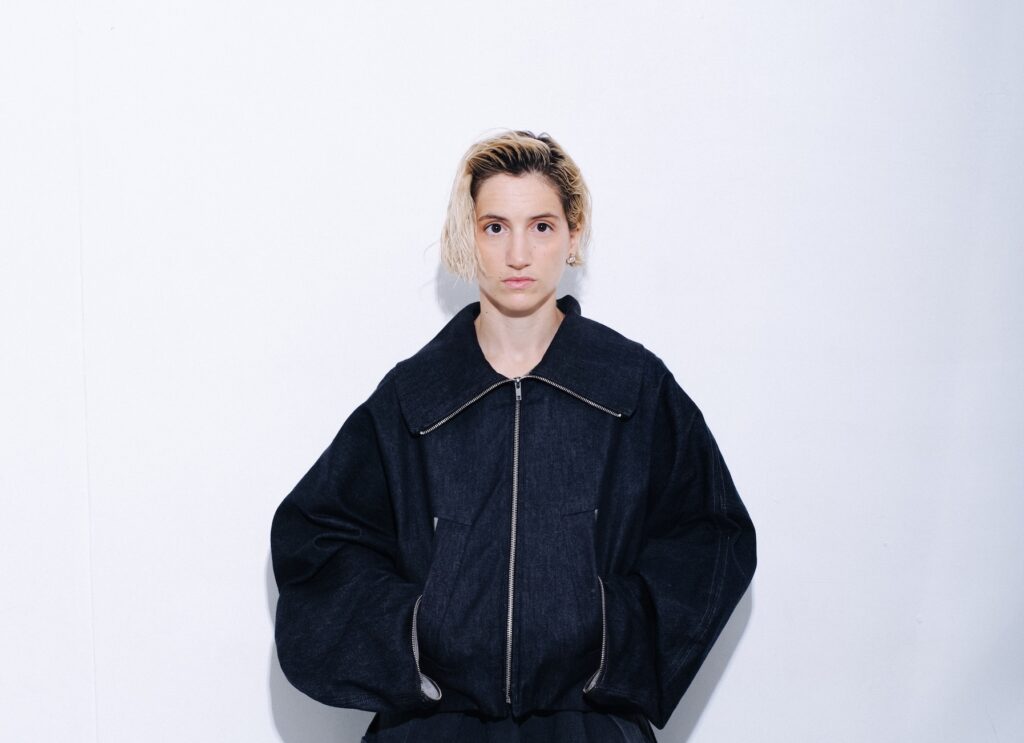
Four years after Sauvage, Aloïse Sauvage returns with La Foudre, in stores on October 23. She talks to us about this album where romantic heartbreak is the starting point for a return to oneself.
Freedom takes the stage! For her third album – the first recorded on an independent label – Aloïse Sauvage has taken the reins, aided by producer Mathieu Epaillard. Between electronic productions, hip-hop influences, and intimate confessions, the singer, dancer and actress explores the myriad ways of picking herself up after a breakup. A visceral and audacious album, where love is as much a subject as self-assertion.
Four years have elapsed between Sauvage and La Foudre. In what state of mind were you when you began working on this new album?
In 2023, I was finishing my tour, and I had just ended my collaboration with Universal. I needed renewal! At the same time, I was going through a romantic breakup. I felt worn out and I decided to leave Paris and approach creation differently. At first I was mute, I refused to put words to what I felt, and then once the creative process began, I could only speak of that breakup.
Why did you choose “La Foudre” as the album title?
I obviously refer to love at first sight, but not only. At the start of the album, the lightning represents the violence of the breakup. In a single moment, an entire landscape can disappear. As the tracks unfold, this energy transforms. The lightning is no longer an inexorable blow I endure: I choose to transform this pain into a force. I dedicate the album to all the people who have transformed what strikes them into a force that lights them up.
It’s rare to hear you talk so much about love. Why this choice?
I needed to talk about love, but I was afraid it would feel superficial compared to my usual songs, which lean more toward social issues. The entire energy of this album tells a story of reclaiming oneself. In the course of this theme, I took the opportunity to address topics that are dear to me: the search for freedom, questions of identity, gender, self-assertion.
The breakup also includes the one with your label. What does leaving a major to become independent change?
Everything! Being independent allowed me to follow my instinct from A to Z, to take risks. I was free to work at my own pace and to listen to myself artistically. I’m certain that La Foudre would not have existed in this form otherwise. That said, I appreciate the privilege of having worked with a major at the start: it allowed me to produce my music, to shoot my first videos, etc., even when I had no treasury.
What has changed in four years in your approach to making music?
I used to write themed songs. An anthem here, something more sensual there… It was almost scholastic in my intellectual approach. With this album, I blew up the limits I had set for myself. I delve more into emotions, sensations. I co-wrote the entire album with Mathieu Epaillard, the Nantes-based James Blake. In “Ailleurs Higher,” my first track, I was already trying to achieve that meeting between electronic music and cadence, with a flow imbued with my hip-hop and rap references. This time, I feel I have succeeded.
Between your two albums, you’ve also gained cinema experience, notably as the lead in Miss Mermaid, released last July. How does that translate into your clips?
I called on Marie McCourt, a director who works in both fiction and documentary. I wanted her naturalistic gaze. We used a small camcorder and stacked up rushes to achieve this raw, unadorned rapport. And then there is always the body as the pillar of my creation. In the video for Tomboy, you see the little girl I used to be, at the skatepark, in the breakdance, always surrounded by boys and in motion. In Antidote, it’s the skin and the sweat that show through. I can’t wait to perform this project on stage! I’m playing La Cigale on February 3, 2027—it’s going to be amazing!
