
More than 40 years after the abolition in French law of the last law penalizing homosexual relations, the bill recognizing the victims of this state homophobia was adopted in second reading by the National Assembly.
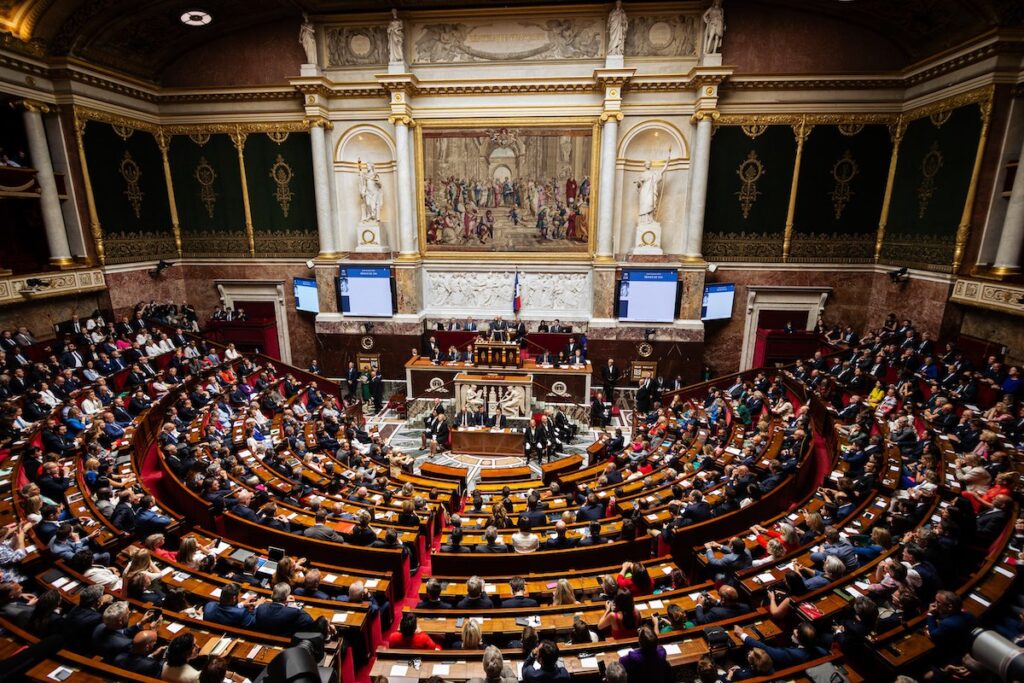
A step closer to redress. The National Assembly voted, in second reading this Thursday, December 18, on the bill aimed at repairing the persecution of homosexuals by the French police between 1942 and 1982. Despite opposition from the National Rally (RN) and its allies, the Assembly restored a text more favorable than the Senate’s version, which had in particular refused to establish a system of financial reparations for living victims of this state homophobia.
“This version restores overall coherence. Where the law has served to discriminate, this is a text of dignity returned. Let us not blush, let us proudly carry this effort of financial repair”, said the rapporteur of the bill, Hervé Saulignac, Socialist deputy from Ardèche. “Repair must not turn into perpetual repentance, nor into an open-door policy”, denounced by deputy Éric Michoux, an ally of the RN.
€10,000 in reparations
The opposition from the right and the far-right on this point did not prevent the Assembly from approving the creation of a commission tasked with examining reparations requests. Thus, the text provides that a person previously convicted of homosexuality can approach this commission and request €10,000 in flat-rate reparations, to which may be added €150 per day of imprisonment, as well as the reimbursement of any fine related to the conviction.
Historians estimate that before 1982 and the decriminalization of homosexuality in French law, thanks to the actions of Robert Badinter and Gisèle Halimi, tens of thousands of gay men were convicted under a law setting a specific age for consent to homosexual relations. Another article of the Penal Code moreover aggravated the repression of public indecency for homosexuals, affecting between 30,000 and 50,000 people, according to the work of social historian Régis Schlagdenhauffen, senior lecturer at the École des hautes études en sciences sociales (EHESS).
Before the text is definitively adopted, the National Assembly and the Senate will attempt to find common ground through the convening of a joint committee. If this body fails to reach an agreement, the text will be re-examined by the Senate, then by the Assembly, which will then have the final word.
