
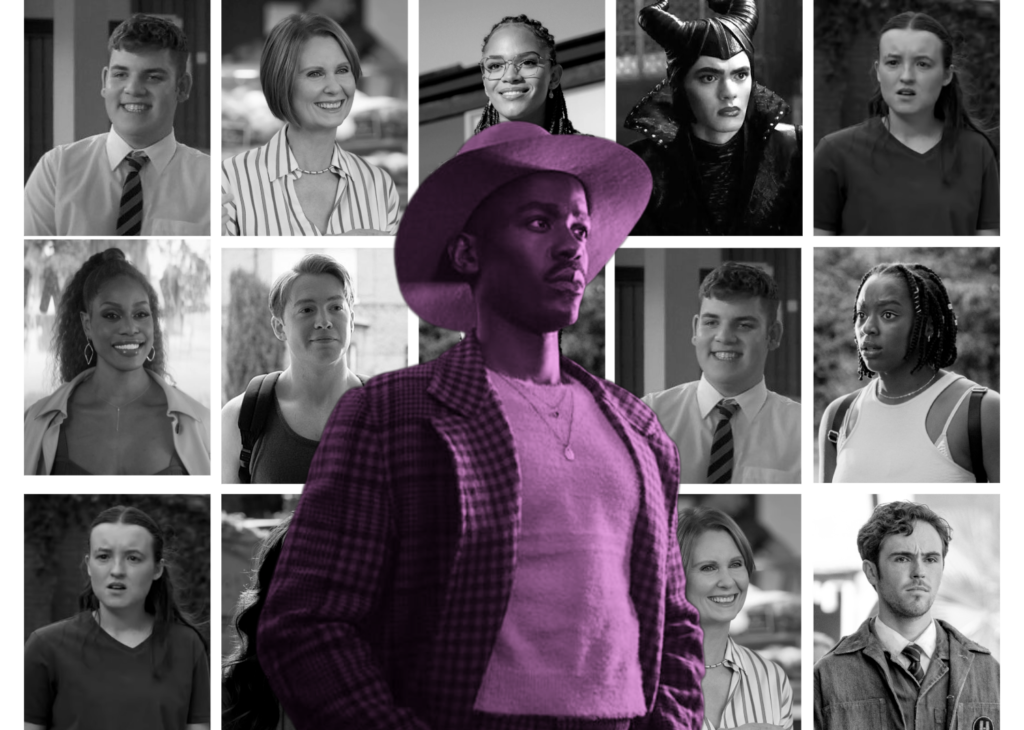
A global trend confirmed by a study from GLAAD
Around the world, the representation of LGBTQIA+ people in the media is going through a period of decline. In the United States, this development has been precisely analyzed by GLAAD, the leading organization that publishes annually its report Where We Are on TV.
The 2024-2025 edition reveals a historic and troubling drop in LGBTQIA+ presence on streaming platforms and television networks.
Alarming figures: 41% of LGBTQIA+ characters will disappear
According to GLAAD, the 2024-2025 season counts 489 LGBTQIA+ characters, a slight increase from the previous year. But this uptick masks a much darker reality:
- 201 LGBTQIA+ characters (41%) will disappear next year due to cancellations, series finales, or limited formats.
- 96 additional characters (20%) could also disappear, due to the lack of renewal of the series in which they appear.
The organization speaks of a “dangerous precedent,” noting that the disappearance of these characters permanently reduces the social and cultural impact of LGBTQIA+ representation.
Trans characters: the hardest hit by the decline
The situation is even more worrying for transgender characters. Among the 33 transgender characters counted this year, only 4 will return next year.
Several trans-inclusive series have ended, notably:
- 9-1-1: Lone Star
- Kaos
- Clean Slate
GLAAD mentions a “worrying decline” in trans visibility, in a context where these representations remain already widely marginalized.
Why this drop? Between political pressures and studios’ strategic shift
This sudden reduction in LGBTQIA+ representation takes place in a particular political and cultural environment. According to GLAAD and Deadline, several factors contribute to this trend:
- A shift toward “family-friendly” content. Studios and platforms adopt more conservative strategies, reducing creative risk-taking and the diversity of characters.
- Reduction of DEI programs. Several major audiovisual groups have reduced their Diversity, Equity and Inclusion initiatives, often under budgetary or political pressure.
- Rise of reactionary discourse. In Trump-era America, anti-LGBTQIA+ messaging has strengthened, impacting editorial decisions and the perception of the “risk” associated with these representations.
- End of an inclusion cycle (2015–2017). Between 2015 and 2017, platforms like Netflix, Hulu, Apple TV+, Paramount+ or Disney+ had massively increased the presence of LGBTQIA+ characters. The current decline therefore represents a brutal step backward.
A heavy setback with consequences for LGBTQIA+ representation
GLAAD recalls that LGBTQIA+ characters play a crucial role in modern television:
- They help the public better understand the diversity of identities.
- They foster empathy and promote shifts in attitudes.
- They provide role models and narratives essential for LGBTQIA+ youth.
The decline announced by GLAAD marks a worrying turning point for LGBTQIA+ visibility in the media. If the 2024-2025 season remains numerically strong, 2026 could open a period characterized by a scarcity of LGBTQIA+ characters, in a tense political context and a rapidly changing audiovisual industry.
For GLAAD, this mass retreat is not merely a statistic: it is a warning signal for the future of diversity on screen.
