

As updates roll out, Instagram continues to offer more features for users. Launched on Wednesday, August 6, the Map feature, similar to Snapchat’s, sparked panic among social media users. This feature, which allows users to share and view their real-time location, raised strong concerns about privacy protection and personal data. Yet this is not the only one that endangers LGBTQ+ people.
The new Instagram features, dangerous options for LGBTQ+ people?
After the discovery of the Instagram Map, many internet users voiced their concerns, notably regarding the protection of minority groups. This is not the first time that an online feature has facilitated attacks against LGBTQ+ people.
It is not uncommon for dating apps and social networks to be used by homophobes to target and trap LGBTQ+ members. In 2023, Mediapart released a documentary on this subject: “Ambushes, Invisible Crimes.” It revealed that every week in France, a gay man is lured into a trap. For several years, homophobic assaults and violence have been increasing across France. This reality is confirmed by the latest report on LGBTIphobia published by SOSHomophobie, which reinforces the fears of LGBTQ+ people.
The latest Instagram updates include several options that can pose a danger for LGBTQ+ people, including making the likes of people we follow or who follow us more visible.
This can put at risk queer, non-out people who enjoy content related to the LGBTQ+ community or participate in contests to win binders, for example. Republishing content also creates access to new notifications when a friend likes content we have reshared.

Instagram tries to reassure its users regarding these new features.
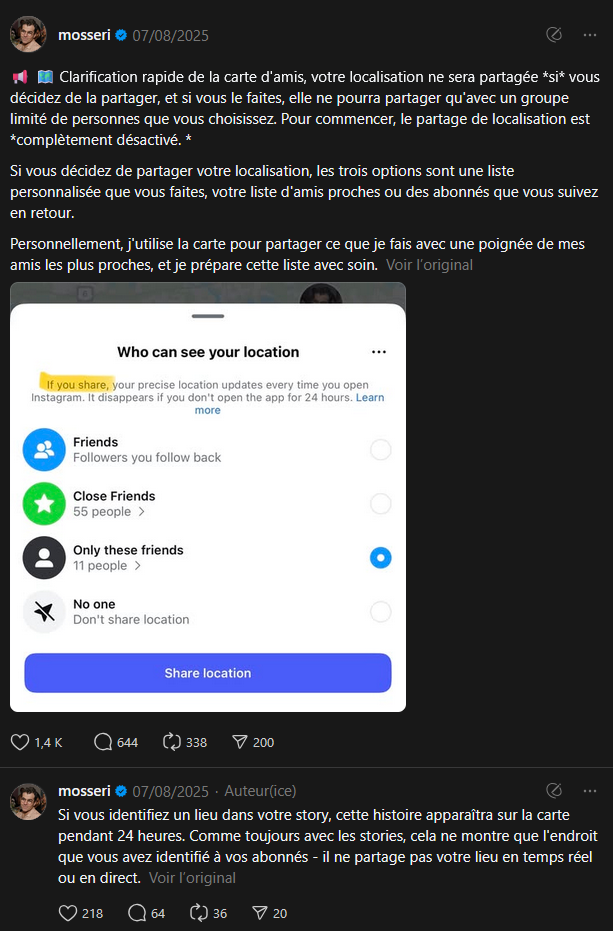
On Threads, Adam Mosseri, head of Instagram, tried to reassure Internet users regarding the Map: “Your location will be shared only if you decide to share it, and if you do, it is possible to share it only with a limited group of people you choose. We ask you to confirm after you indicate you want to share your location,” he notes.
By default, location would be disabled, but if this is not the case, you can remove it at any time. To do this, simply go to the app’s settings, or directly to your phone’s settings.
The risks related to personal data online
For reference, your first and last name, email address, phone number, and postal address are all personal data that can make you identifiable. Online, with proper practices and tools, it is quite easy to build a comprehensive profile of individuals who share a lot of personal content.
For these reasons, it is recommended to be cautious and to share personal data sparingly, especially when one is a queer person. While one should not yield to moral panic, it is important to be informed and to understand the risks related to personal data leaks.
LGBTQ+ people face specific risks, such as cyberbullying, threats of violence, discrimination or ostracism, blackmail, extortion, and physical assaults.
Transgender and non-binary people can be victims of the disclosure of their “deadname” or their gender identity while they are not out, which can also put them in danger.
Our tips for protecting your data online
To protect your personal data online, you can adopt solid digital security practices. This includes strengthening your passwords, enabling two-factor authentication, and also how you use social networks.
Some data can be shared, such as your address, your phone number (for example when you post a CV online) and can harm you. You can also check the privacy settings of your profiles on social networks to be fully aware of what you want to share or not.
Do not hesitate to learn about your rights and how to exercise them through this official article published by the Ministry of Economy.
