
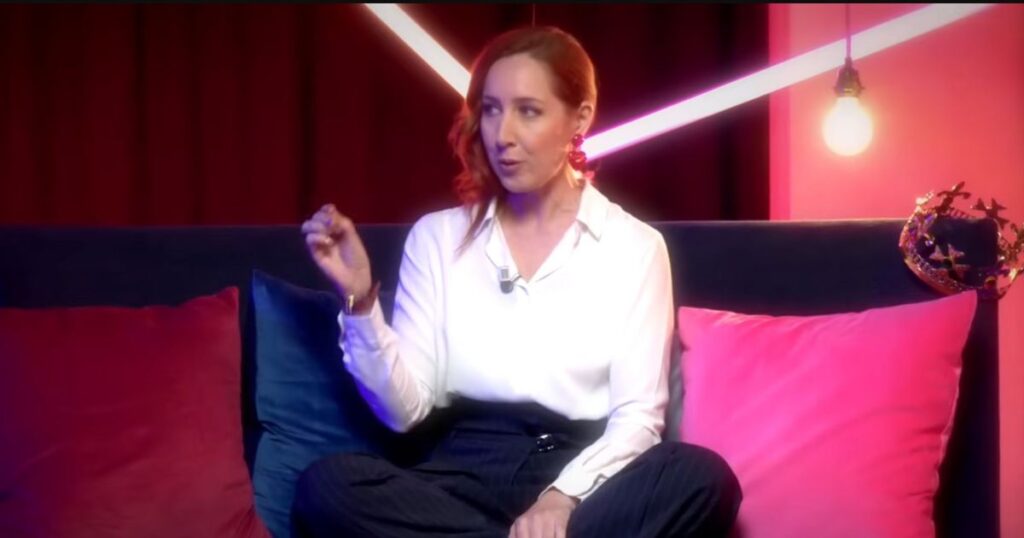
“Queen Size”, the new TV game show signed by Quotidien and hosted by Maïa Mazaurette, puts its contestants under the covers to better dismantle clichés about sexuality.
Since we are so comfortable in a bed, Quotidien launches Queen Size, a new program that explores the nuances of sexuality. The concept is simple and often subversive: three contestants gather around a bed to try to become the “best lover,” the best male or female lover. Games, challenges, confidences, sometimes trials, all under the enlightened gaze of queer and feminist figures. The show is available on Quotidien‘s YouTube platform, and its first episode brings together sexpert Maïa Mazaurette, influencer Louise Aubery, comedian and videographer Marine Leonardi, and comedian Jessé. The aim? To deconstruct stereotypes about sexuality, to break taboos, and to make a more queer culture of sex in today’s mainstream media landscape a little less heteronormative.
Maïa Mazaurette, known for her sex chronicles, is the mistress of this new light-hearted and relaxed game: neither a moralizing expert nor dogmatic, but a guardian of free desire. Her role in “Queen Size” is primarily to encourage contestants to shed the clichés that mark their intimacy. To dethrone her, those who claim the title must demonstrate audacity by engaging in a series of physical challenges, role-playing games and other clashes, all more far-fetched than the last. The tone is playfully offbeat, and the queen size bed becomes a platform and a battleground.
Sex and Humor Without Taboo
In this first episode, we notably meet Jessé, an engaged queer stand-up pro, who already enjoys a substantial cache of derision, finesse, and ease in turning patriarchal ridiculousness into bursts of laughter. Few are capable of laughing at sex like Jessé. So skilled at blending sarcasm, queer experience, and devastating punchlines, he is a serious contender for the title of “best lover.” In a show about sex, his queer humor and provocatively inclined style is a real asset for dissolving taboos.
But beyond the sensual staging, Queen Size is also a political program. It raises a number of points of interest. The LGBTQI+ audience will recognize themselves, for once, in a entertainment show without having to endure yet again a conventional normality. The heterosexual audience, for its part, will be confronted with discourse that is not there solely to entertain, but to discuss consent, the diversity of bodies and imaginaries in a pajama-party atmosphere. Thus, Queen Size manages to bridge queer culture and the mainstream, between subversive audacity and honest reflection in a world where sex remains as taboo as it is ultra-mediated.
