
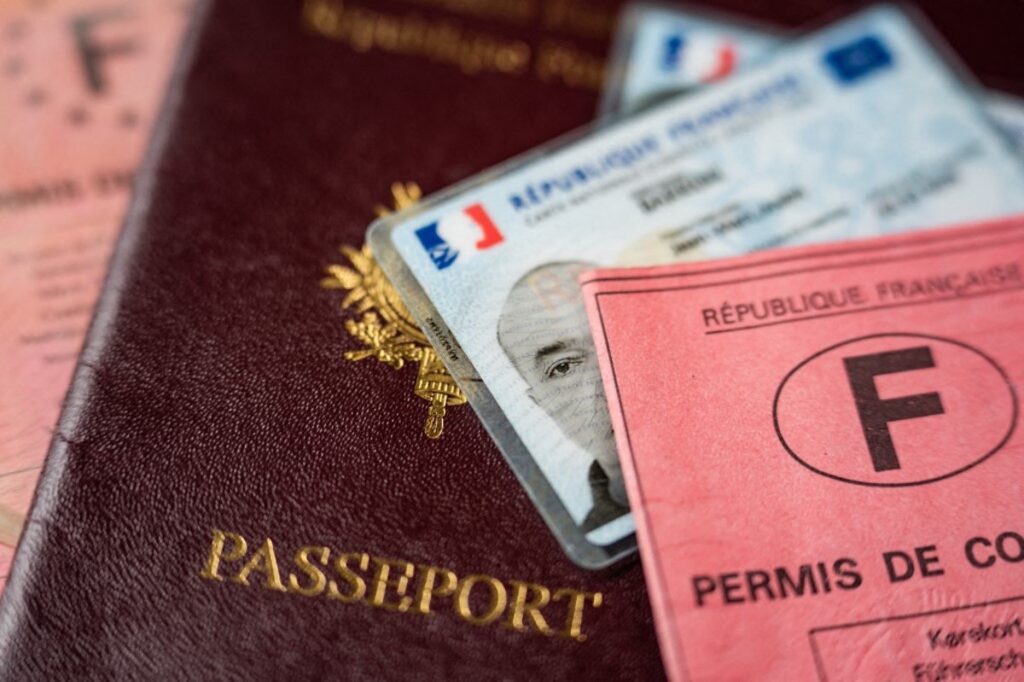
More than six months after the Defender of Rights issued around 56 recommendations for respecting the gender identity of transgender people, the Minister of Justice, Gérald Darmanin, circulated to civil status services a circular addressing two points: the change of the sex marker and that of the first name.
“I call each civil registrar and each magistrate to the utmost vigilance in respecting the rules (…).” Signed in person by the Minister of Justice, Gérald Darmanin, a circular dated January 8 was disseminated to the services responsible for civil affairs in order to clarify “the implementation of the procedure for changing the first name of transgender people and the procedure for modifying the sex marker on the civil status”.
The first rule recalled concerns an obstacle still too often reported by those concerned, namely the request that is always made for them to produce a medical certificate to support their file for changing the sex marker on the civil status. If this request must always take place before the judicial court, the circular recalls “the entirely demedicalized nature of the procedure”. Since 2016, indeed, the Civil Code explicitly states that “the fact of not having undergone medical treatments, a surgical operation or sterilization cannot justify the refusal to grant the request”. It is therefore, the circular insists, disseminated notably on the intranet of the Directorate of Civil Affairs, “forbidden to require the applicant to produce medical elements or to reject their request because such elements are absent”.
Appearance does not define the first name
Another situation still encountered by many transgender people despite the law: the refusal to change the first name on the basis of the supposed alignment of the name with the person’s appearance. Yet, if the law that dejudicialized the procedure for changing the first name, adopted in November 2016, entrusts the civil registrar with the power to assess the “legitimate interest” of the request, this margin of appreciation cannot be based on the person’s appearance, reminds the document which calls agents “to avoid, in this matter, reproducing gender stereotypes”: “The civil registrar’s decision must in no case be motivated by the alignment or lack of alignment between the applicant’s physical appearance and the requested first name, which may be a neutral, epicene, feminine or masculine name.”
And once again, there is no question of requiring a medical certificate: “Such certificates or any other medical documents shall not be required when the request is motivated by a reason related to the applicant’s trans identity. Likewise, the absence of medical documents in the applicant’s file shall not justify rejecting the request to change the first name.”
“These procedures, which are entirely demedicalized, accessible, fast, and respectful of the privacy of transgender people’s private lives, aim to facilitate the procedures for these individuals”, emphasizes the circular from Gérald Darmanin, which specifies that “the attention of the Chancellery has been drawn by the Defender of Rights’ framework decision No. 2025-112 relating to the respect of the gender identity of transgender people dated June 16, 2025”. Therefore, it is a pity that the ministry confines itself to these two legal reminders which, if necessary, do not sufficiently ease the lives of the people concerned. In her framework decision, 63 pages long and divided into ten chapters, the Defender of Rights, Claire Hédon, produced no less than 56 recommendations, including one long demanded by the associations involved and supported by têtu·: to further dejudicialize the change of the gender marker on the civil status so that this step becomes declaratory and is finally, truly, based on the self-determination of transgender people.
via AFP
