
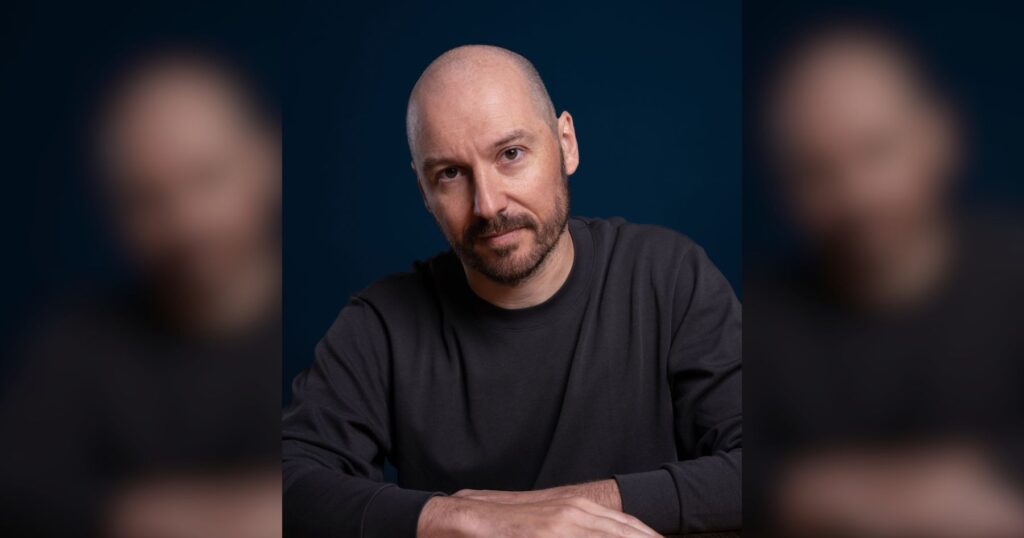
Former editor-in-chief of the magazine Néon, journalist Julien Chavanes releases The Other Face of #MeToo (HarperCollins). A well-sourced book filled with testimonies in which he tackles the subject of sexual violence experienced by men.
What prompted you to write this book?
Julien Chavanes: There are first sexual violences suffered within my family. This gradually opened a framework for reading the subject. And then the encounters I had while working on these topics allowed me to question masculinity, its impact on our lives… When my editor proposed that I write a book about MeToo Boys, I was initially a bit afraid, thinking it would be very heavy. Indeed, it was, but that wasn’t a sufficient reason to refuse.
The movement launched in 2024 is called “#MeToo Boys” rather than “#MeToo Men”, why?
Because sexual violence experienced by men mostly occurs before the age of 18. It is largely a MeToo of childhood, linked to the MeToo incest. Moreover, men who testify about violence experienced in adulthood have even more difficulty speaking about it. It is a taboo within a taboo. It is believed that an adult man is less exposed, because he would be able to resist. This completely forgets the dynamics of coercion and cultural conditioning.
The Gay MeToo, launched in 2021, has nonetheless gained little traction. Why, in your view?
For a long time, society wasn’t even capable of imagining that a man could be a victim of sexual violence. Today, some witnesses tell me they feel they are listened to more than women, that a man’s voice carries more in our society. But there is an exception for gay men, who are less heard and receive less support. Their testimonies are more often questioned, or it is assumed that what they endured is linked to their sexuality, that they are putting themselves in danger. In short, if we follow that reasoning to its end, that they deserved it. A man who had been raped in a gay sauna told me: “If I talk about it, what people will stop at won’t be the violence I endured but the fact that I was in a sauna.” He also told me that even among his close friends in the community, it was completely minimized.
You note, indeed, a form of tolerance toward sexual violence within the gay community…
I think it is very rooted in people’s life paths. There is a difficulty in understanding that what one has suffered is violence. Men are exposed to violence very early in life and have trouble recognizing what hurts them. They have learned to put their feelings aside, not to be in touch with their emotions. Among gay men, it is even stronger since they are even more exposed and very early. There is also, within the gay community, a culture of secrecy that was very important for meeting, loving, and having sex. This built a rich counterculture but probably did not allow a clearer voice to be heard on the issues of coercion and violence.
You observe that women often play an important role in raising awareness among male victims.
It is the fruit of feminist culture produced over decades. It is often partners—for heterosexual men—or close friends for gay men, who help them detect the violence endured, articulate it, seek care, and possibly pursue justice.
You emphasize, moreover, how the people close to a victim can welcome their words.
When you are close to victims, there is very little culture of what to do with that speech. A disclosure poorly received by loved ones can create retraumatization. Whereas the response is not very complicated: “I’m listening to you, I believe you, what do you need?” And then come back to it, a little, from time to time. The novelist and journalist Adrien Borne recounts that after he testified on Facebook about the violence he had suffered, a friend was waiting for him downstairs. We can all be that friend who opens their ears and their heart.
