
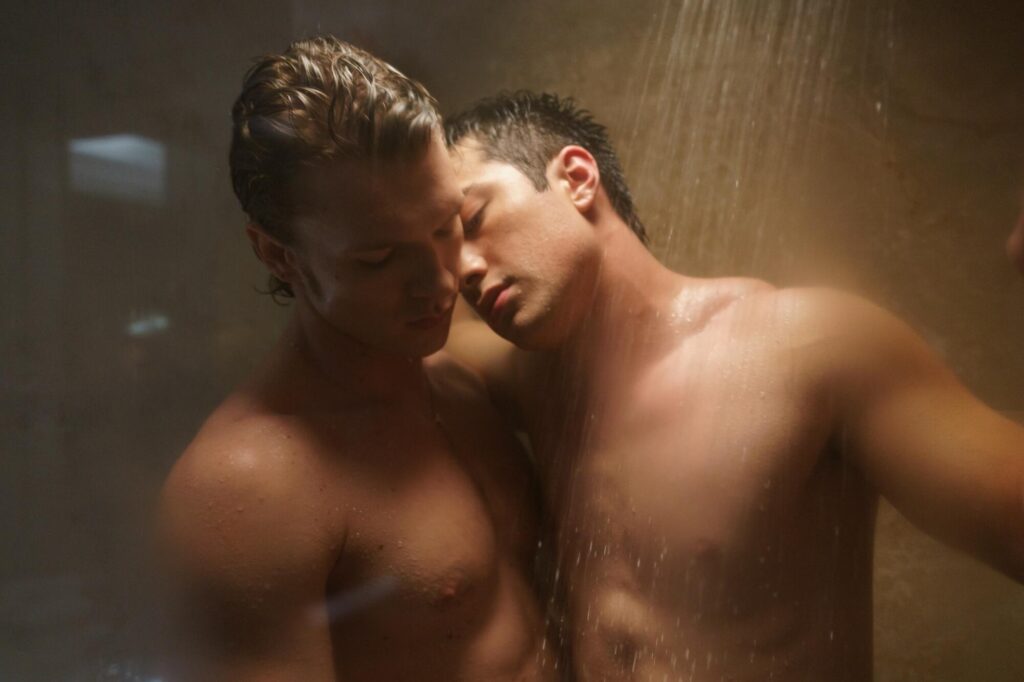
Available in France from February 6 on HBO Max, Heated Rivalry is the ultra-glossy gay romance that’s buzzing. Between hypersexualization, clichés, and imposed body norms, the series raises several questions about the representation of gay and bi men. The SimiliQueer editorial team binge-watched the series and analyzes its positives and negatives.
Heated Rivalry and the myth of the perfect body among gay men
In Heated Rivalry, all characters have a bodybuilding athlete’s physique, which is coherent in itself for characters who are athletes. However, even the visibly precarious barista is stocky, which is a missed casting opportunity to represent the diversity of queer bodies.
This body-imposition found in the majority of series representing masculine homosexuality creates an unattainable standard. It does not reflect the reality of homosexual relationships at all and can make many viewers uncomfortable.
This ultra-masculinity contributes to a heteronormative representation of the “good gay”: muscular, virile, and economically privileged. Of the four main gay/bi characters, 100% fit this model.

Heated Rivalry : a series that explores coming out and questions of love
Throughout the series, the two protagonists question their own sexuality, between the relationships they may have had with women and their deep desire for a story between the two of them.
They also face the absence of openly out hockey players, which prevents them from fully flourishing, in addition to the fear of judgment from their own entourage.
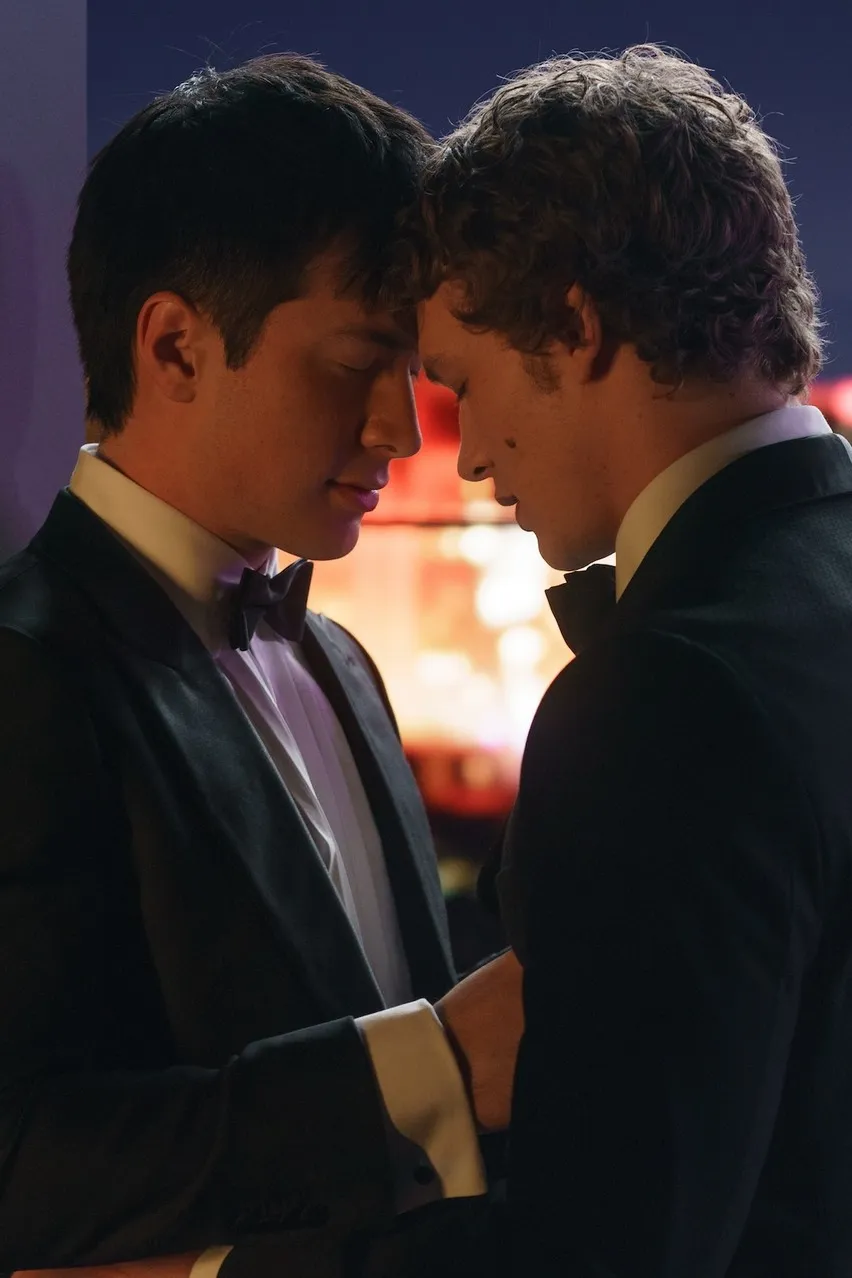
When Heated Rivalry invisibilizes queer diversity and non-normative identities
In this ideal of the “good gay,” the muscular man is also virile and rich. The show’s success with a heterosexual cis audience, which highlights this single model, speaks volumes about the implicit conditions for accepting queer men in society. Here, there is no room for the “crazy” one: gay and bi characters must conform to normative masculinity to exist…
Even the character who is out at the beginning of the story fits within this “good gay” prism. This is, in our view, a missed opportunity to showcase the full diversity that exists within the community.
Heated Rivalry highlights the lack of openly gay and bi players in men’s hockey
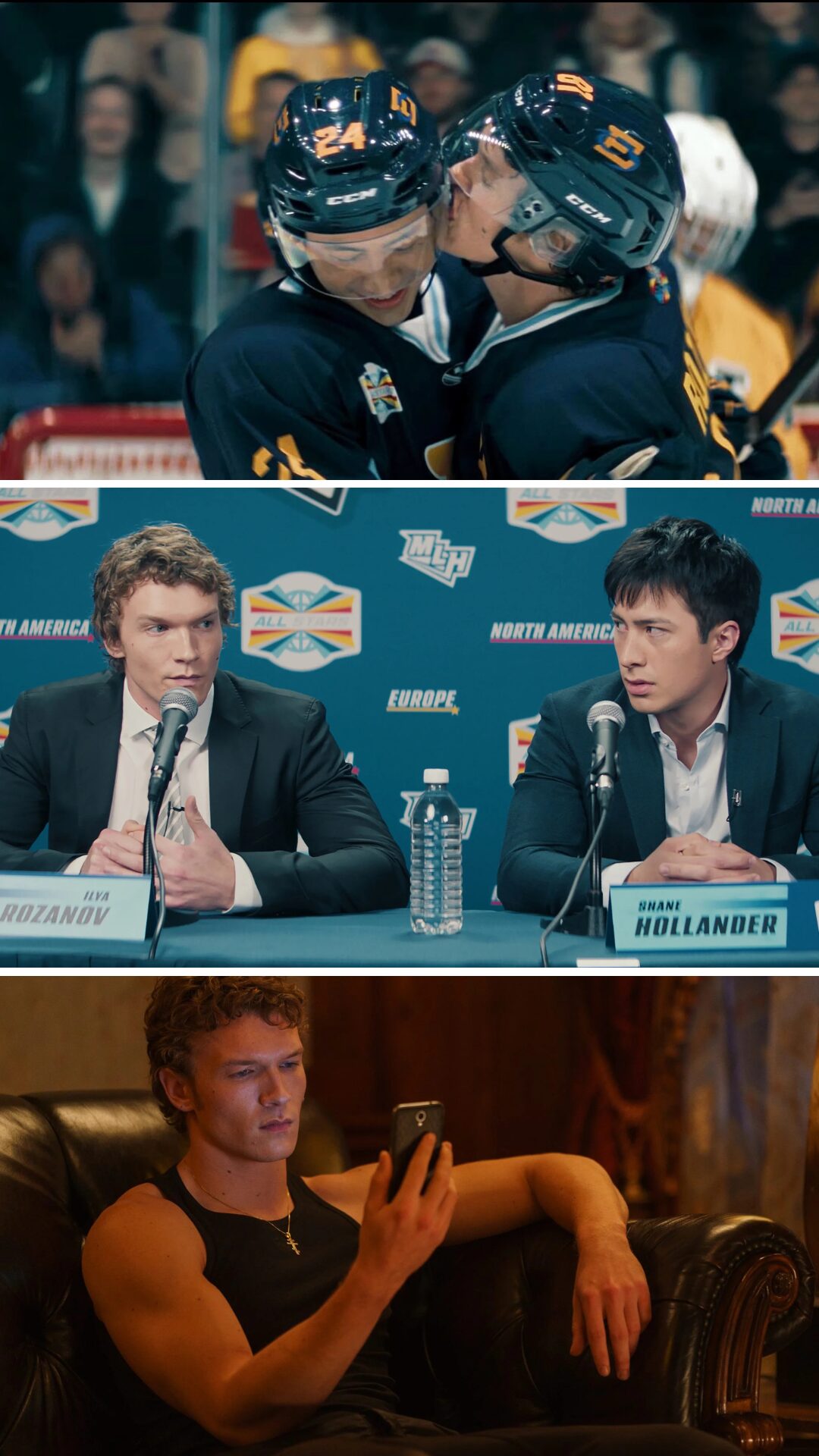
Ilya and Shane encounter the absence of homo figures in hockey; they wonder if some players might be gay/bi but none publicly proclaims it.
The series raises the lack of queer representation in men’s sport (here hockey) with many athletes who stay in the closet. The NHL (National Hockey League) is moreover the only professional sports league where there are no openly out players… until recently!
Indeed, following the show’s success, professional hockey player Jesse Kortuem recently came out, illustrating the crucial importance of queer representation in the media.
Heated Rivalry and the repetitive representation of the bourgeois gay
The main characters live in a bourgeois, self-contained circle and hold significant economic capital. They spend their evenings surrounded by wealthy and influential people, far from the reality of the vast majority of gay or bi men who are not represented.
Although this representation makes sense given they are pro players, we lament this another media portrayal of the bourgeois gay, which for many imposes an implicit standard to reach.
Heated Rivalry offers a rare and nuanced portrayal of autism
Even if it isn’t explicitly addressed in the series, Shane is on the autism spectrum. His voice and facial expressions are not very expressive, he is tense, anxious and focused, and has trouble expressing his feelings. Without falling into the usual clichés of autistic characters, Shane offers a representation that is far too rare of non-white neurodivergent people.
For season 2, we would like the topic to be addressed more directly, and for Shane’s autism to be explicitly acknowledged to give visibility to people with these conditions.
The hypersexualization of gay men as a marketing argument
If the show has generated so much buzz, it is mainly due to the VERY numerous intimate scenes between Ilya and Shane. Having become in a matter of days true sex symbols, their trysts spark debate because sex seems to be the number-one marketing argument at the expense of the plot and the characters’ dialogue.
Did we need a series that hypersexualizes gay/bi men even more than is already the case in the collective imagination, society, and within their own community?

Heated Rivalry succeeds in highlighting certain journeys, such as those of queer immigrants, but also reminds us that visibility alone is not enough: the series still unfortunately leaves out the diversity of bodies, classes, and experiences within the LGBTQ+ community.
