
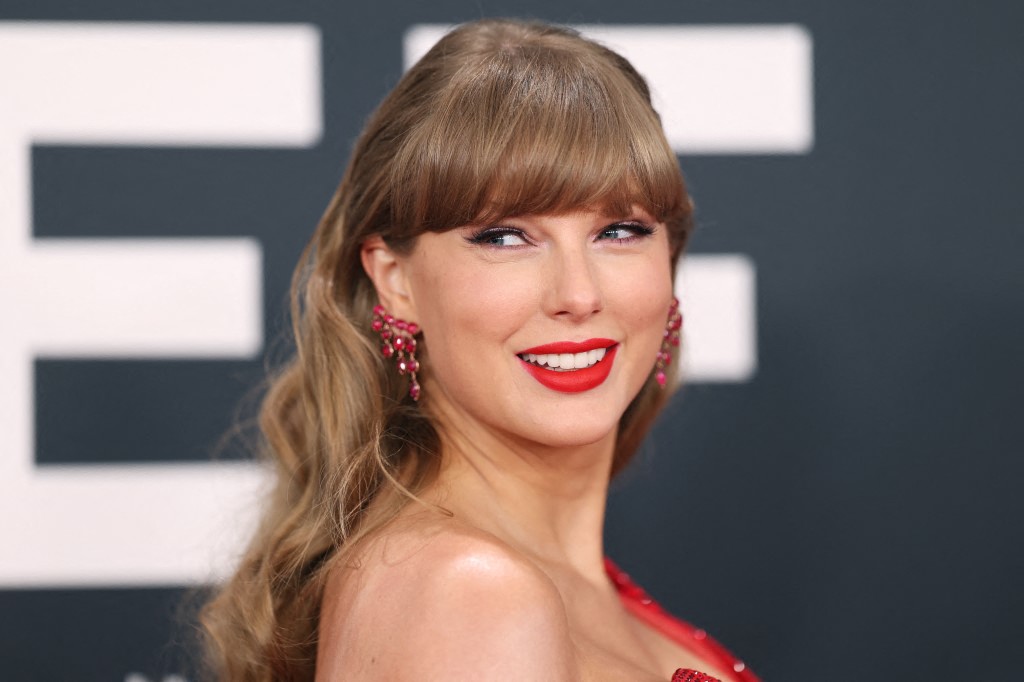
They say Taylor Swift is “the perfect ally.” A mainstream pop star, heterosexual, billionaire, yet capable of rallying LGBT+ audiences in large numbers. But what is really happening on the fans’ side? Is the love she receives from queer communities simply a militant projection, or does it ground itself in real social experiences?
Text by Arnaud Alessandrin
My Sociology of Taylor Swift (Double Ponctuation, 2026), conducted with 1,185 French Swifties, allows for some numerical answers—and sometimes surprising ones.
First finding: Taylor Swift’s fanbase is overwhelmingly female. Three quarters of respondents identify as women (75 %), 20 % as men, and 5 % position themselves outside the gender binary (non-binary, trans or self-identifying as queer). These 5 % may seem minority, but they represent a proportion clearly higher than that observed in the general population. In other words, trans and non-binary audiences are overrepresented here, and this is not insignificant.
But it is when gender is crossed with sexuality that the picture becomes even more telling. Among the fans surveyed, LGBT+ people are very widely represented, far beyond national averages. Lesbian or bisexual women, gay men, queer or non-binary people occupy a central place in the fan sociabilities around Taylor. For many, being a Swiftie is not merely loving an artist: it is inhabiting a cultural space perceived as safe, benevolent, non-judging.
Big-Sister Figure and Ally
This dimension appears very clearly in the qualitative interviews conducted for the survey. Taylor is described as a ‘big-sister’ figure, sometimes a symbolic refuge. Her songs accompany early love stories, but also breakups, violence, difficult coming outs, family silences. Where other pop universes valorize performance, domination, or virility, Taylor narrates vulnerability, doubt, emotion. And these registers resonate particularly among people whose sexual and gender trajectories have been marked by the injunction to discretion, or even shame.
To be clear here: Taylor Swift is not a queer artist, nor a radical activist. And yet she occupies a central place in contemporary LGBT cultures. Why? Because she offers an emotional grammar compatible with queer experience: secrecy, waiting, ambivalence, unrequited love, fear of doing wrong, the gaze of others. All these themes run through her lyrics and many LGBT fans recognize them as intimately linked to their own biography.
This identification is not only symbolic. It is also political. From the late 2010s, Taylor Swift publicly takes a stand in favor of LGBT rights, notably against discriminatory laws in the United States. Her video You Need to Calm Down marks, in this respect, a turning point: visibility of flags, presence of queer figures, explicit denunciation of homophobia. In the survey, a majority of LGBT fans cite this episode as a decisive moment: not because it would be revolutionary, but because it emanates from an ultra-mainstream artist, capable of making these issues audible on a large scale. A group of gay fans, a “Gaylor”, will even be created!
A Refuge Community Around Taylor Swift
However, Swifties are not fooled. Many speak of a “prudent” alliance, sometimes too smooth, sometimes too late. But this restraint is also what makes Taylor audible to very diverse audiences, including families, territories or milieus not particularly engaged with LGBT questions. For some young queer fans, loving Taylor is also an indirect way of introducing minority narratives into heteronormative spaces, without frontal conflict.
Thus, Taylor Swift does not merely produce hits: she creates spaces for the circulation of affect, where young LGBT people can recognize themselves, speak up, sometimes protect themselves. Being a Swiftie, for many, means belonging to a community that allows sensitivity, emotional excess, self-narrative— all of which heterosexual norms have long disqualified.
In this sense, the relationship between Taylor Swift and her queer fans says less about the artist than about our era. An era where cultural icons are no longer merely admired, but mobilized to hold together identity, emotions, and values. An era where we no longer love only a singer for her voice, but for what she enables one to say about oneself.
And if Taylor Swift has become, despite herself, a queer icon, it may be because she has never ceased to sing what many learned very early: to love often means to doubt.
Photo credits: Matt Winkelmeyer / GETTY IMAGES NORTH AMERICA / Getty Images via AFP)
